Welcome, I’m glad you are here…
Having made it this far, you’ve already done the hard part! You’ve decided it’s time to turn towards yourself so that you can better care for your community. The world is so fucking harsh right now and you are just trying to survive. Trusting me with your sex therapy journey means being held with compassion, intention, and science. I use body based methods to help reduce a sense of threat, move through stuckness, and access your most vibrant authentic self.
About Me.
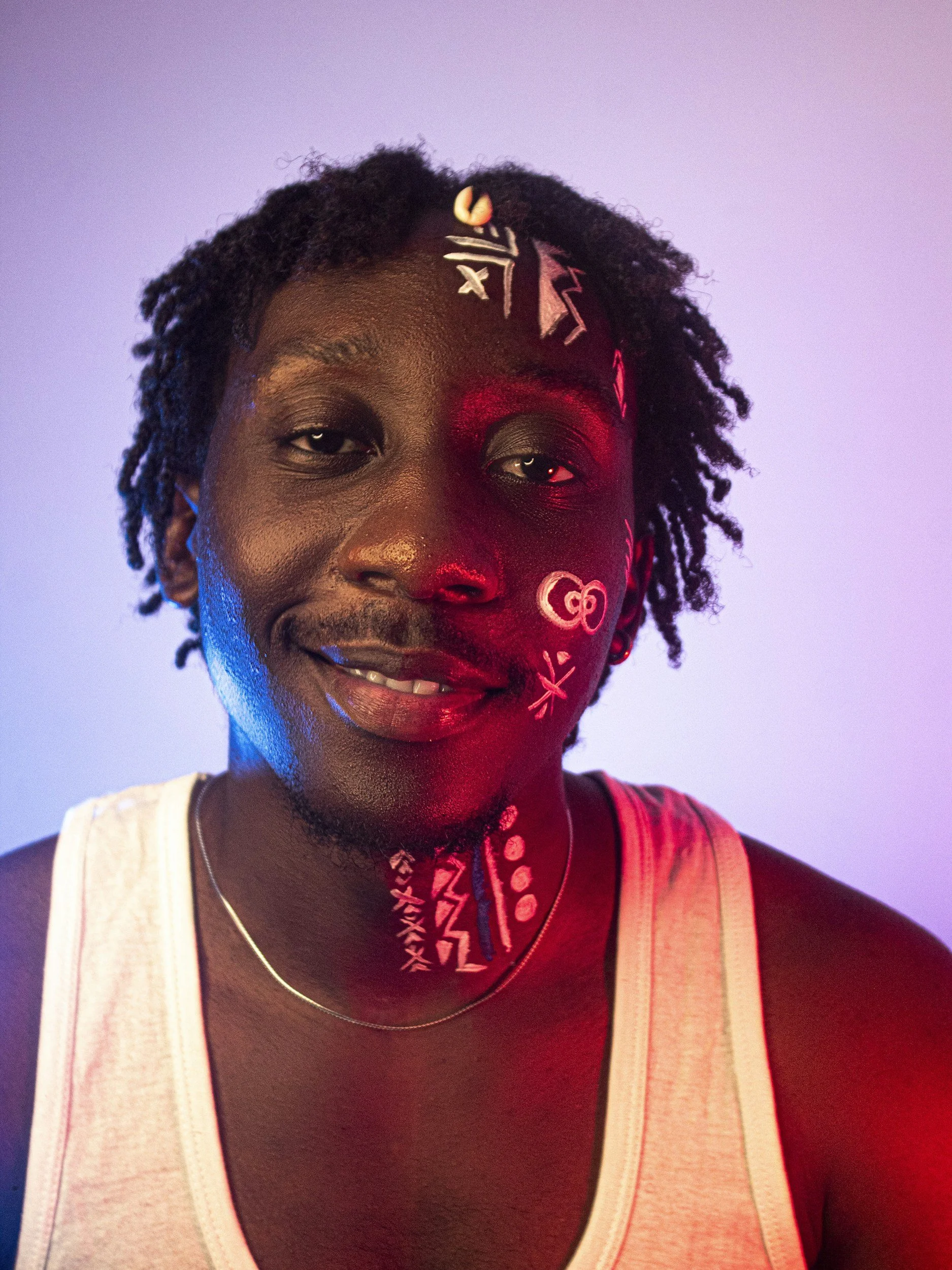
Hi, I’m Bailey (they/she/he). I have been a practicing therapist since 2021 and in the mental health field serving patients in a variety of roles since 2013. I have a passion for this work because I have faced my own challenges in understanding and advocating for myself in a world that is designed to make me and others with even more marginalized identities feel small. My hope is that we can recenter your ease and joy over the messaging you may get from the rest of the world. My belief is that by making small changes to find more authenticity, you are making the world a better place by creating possibility for others. I have witnessed how working on body image with an individual client impacts how they parent and therefore how their child relates to their body, healing decades of intergenerational trauma and self-hatred. These are the moments that remind me I have found the work I am meant to do. I’d love to connect and see if I may be able to support you in finding more ease in your body, joy in your life, and authenticity in your relationships.
Learn about my services.
-
In working with couples, polycules, and families I consider my client to be the relationships between you rather than any one person carrying the problem. I will ask the group to identify a shared goal (ex. improved communication: fight more kindly) and then ask each of you to identify your own work in getting the group closer to the goal (ex. work on my emotional reactivity: notice when I am dysregulated and learn how to care for myself). When one person in the system changes, the system changes as a whole. My hope is that everyone is able to exist in relationship with more authenticity, joy, and ease.
Common issues I treat:
poor communication
desire differences
interest in discussing or opening an established relationship
loss of attraction
identity differences
considering break up (see Discernment Counseling section)
struggles with in-laws, friend groups, or work relationships
-
When working with individuals I am considering the systems you exist within that impact your understanding of the problem. We will explore your cultural identities and how they influence how you relate to the problem and possible solutions. We will look to reframe social, familial, and personal narratives that may be holding you back while honoring that there is a lot outside of your control (hello white supremacy!) By turning towards what you do have control over, we create more empowerment to effectively fight the -isms and -obias within our world.
Some issues I commonly treat:
anxiety
depression
sexual dysfunction (see Sex Therapy section)
sexual trauma
ocd
difficulties with neurodivergence including ADHD and Autism (disclaimer I do not diagnose ADHD or Autism but can refer you to folks who do)
ptsd and c-ptsd
medical trauma
difficulty coping with life’s challenges
body image and self-esteem
internalized -isms and -obias (including misogyny, misogynoir, homophobia, transphobia, transmisogyny, racism, ableism, classism, fatphobia, etc.)
exploring identity
-
Sex therapy is fundamentally about our ability to connect with our own bodies and access pleasure. I do sex therapy in both individual and relational settings. I work with folks anywhere along the sexuality and romance spectrums including Ace/Aro folks. I particularly enjoy working with folks who have a different identity from their partner (ex. asexual and allosexual, bisexual and straight, etc.). In our work we will find the pleasure that is available to you, whatever that looks like. My philosophy is that slow is steady and fast could result in people getting hurt. I’ll help you get in touch with your nervous system and learn more about your internal sense of consent with yourself. From there, I can help you learn how to advocate for your own pleasure with another person should you choose to share your sexuality. Ultimately my hope is that you are able to settle into the most vibrant, authentic version of yourself and let go of all of the “shoulds” that exist around sex
Some common issues I treat:
coming to terms with and exploring a new sexual or gender identity (yours or a partner’s)
exploring and incorporating kink, BDSM, and power play into your sex life
evolving relationship structures (ex. from monogamy to polyamory). Particularly in established relationships when one person is hesitant or resistant to this change
reducing/resolving sexual shame
difficulty accessing pleasure or sexual imagination
sexual trauma and/or dissociation during sex
sexual pain
erectile disappointment (AKA erectile dysfunction)
desire differences (AKA mismatched sex drive)
-
Eye Movement Desensitization and Reprocessing (EMDR) is a therapeutic modality for assessing and treating trauma. I use bilateral stimulation (eye tracking, sounds alternating in each ear, tapping, etc.) to help your brain reorganize traumatic memories into memories of resilience. EMDR doesn’t make your traumatic experiences “go away” but it allows you to hold them without re-experiencing them. For more on EMDR, go to emdria.org
-
Discernment Counseling is like “pre-therapy” for couples and polycules. It is limited duration (up to 5 sessions) and has the purpose of helping clients decide with more confidence to move forward with one of three options:
1) keep things the way they are
2) decide to end (or reconfigure) the relationship with more confidence
3) set down the question of break up to complete one year of intensive couples therapy and then revisit the question
Once the discernment phase is over, we may explore the possibility of working together whether for couples work or conscious uncoupling work. I am happy to provide referrals to my amazing colleagues when it feels appropriate as determined by either the clients or the therapist. For more information on Discernment Counseling, go to https://innovation.umn.edu/mncouplesonthebrink*
*I apologize for the monogamous and marriage centered language on this site. Please know I have evolve this theory to better suit my clients and practice
-
Conscious uncoupling or compassionate uncoupling is for folks in long term relationships who wish to end the relationship with kindness and their dignity in tact.
Some reasons folks are interested this work:
they wish to maintain a friendship with their former partner
they are required to maintain some sort of relationship whether through co-parenting, shared business obligations, or inability to change housing situations (etc.)
they want the end of a relationship to be honored as something special and beautiful, not “a failure”
expectations of intense grief at the end of a relationship
and more!
More about my theories.
For the nerds
Developmental Model
Developmental model comes from the work at The Couples Institute. It is based on the idea that all relationships (parental, couples, friends, work, etc.) move through predictable developmental stages that need to be complete before moving on to the next stage. This theory emphasizes the impact of differentiation (ability to know and share about myself and the ability to hear about how someone I love may be different from me while reducing sense of threat) on relationship development. Learn more about this theory here: A Developmental Model for Healthy Couples
Attachment Theory
Attachment theory is based on the premise that our earliest caretakers helped hardwire our experiences of safety and insecurity and whether and/or how we expect to be soothed when in a state of fear. Your attachment style is not fixed and we can work to create a greater sense of safety by creating secure attachment with self in adulthood. Learn more about the theory here: Attachment-Based Therapy: Overcoming Childhood Trauma and Improving Relationships
Polyvagal Theory
Otherwise known as “the science of safety,” Polyvagal theory is about getting to know your nervous system, it’s triggers and coping tools, and employing both prevention and responsive care to find a deeper sense of control over your emotional body and more overall ease. Learn more about the theory here: What is Polyvagal Theory?
Parts Work
Parts work comes from the theory of Internal Family Systems. While I am not IFS certified, I have found “parts” to be a fit for how clients naturally speak about difficult decisions and moments. It is not uncommon to hear “part of me wants this, part of me wants that.” By allowing both of these parts to have value and speak their truth, we can find a coping tool or solution that provides more ease to the overall system. I help folks gain more alignment with their “Self,” the higher observer that gains information from the more inexperienced but often traumatized “parts.” Learn more about this theory here: Ever felt so stressed you didn’t know what to do next? Try talking to your ‘parts’
Queer Theory
Queer theory is about de-centering cis and hetero identities as “the norm” and breaking down boxes that society puts us in. I use queer theory in an effort to help you better understand your identity with the possibility supportive and flexible labels that don’t limit you to someone else’s definition. Learn more about this theory here: Queer Theory Wikipedia
Disability Justice Frameworks
Disability Justice centers the expectation of difference and seeks to find accommodations “ideal” for the few but benefit the many. Disability is an identity status any of us can enter into at any time and most of us will enter into if we live long and fruitful lives. Incorporating Disability Justice into my work means discussing and accounting for intersectional identities, offering accessibility accommodations like closed captions during session or session recaps, as well as sliding scale payment structures. Learn more about this theory here: Disability Justice Framework
What else informs my therapeutic approach?
My identities
I believe that I cannot set my personhood aside when I enter the treatment room. In fact, I find that some of the most powerful healing happens when you get to see my humanity. I belong to several groups of privilege as well as marginalization. I am white (Irish, Welsh, and a lot of unknown), middle class, and visibly able bodied. I am also queer (bisexual, genderqueer), neurodivergent, and invisibly disabled. There are times when my identities help our work and times when they may set me up for unwanted bias. I do my best to acknowledge where I lack lived knowledge while trying to offer cultural humility in being curious about your experience. I am always up for being challenged in this area and honor that it is not your job to teach me about your communities.
My experiences
I have lived many lives before I became a sex therapist. I was raised in a strict Christian household with a lot of shame around bodies and sex. This was a big motivator in becoming a sex therapist because I wanted to help eradicate unnecessary shame around something so natural. I am a survivor of sexual violence. I have had many opportunities to be uncomfortable in my privilege and have learned how to look towards myself to dismantle systems of oppression I didn’t build but implicitly participate in. I acknowledge this is a work that will always be in progress and that it is important to be attentive to both overt and covert power dynamics. I’m an athlete and a recovering perfectionist. My spirituality is connecting with my body and intentionally turning towards the universe through Tarot.
The Wheel of Consent
The Wheel of Consent comes from the work of Dr. Betty Martin and the book The Art of Giving and Receiving. This work centers around gaining more clarity with your own wants and ability to advocate for them. There is also a healthy dose of how to respect other’s consent boundaries with more ease and alignment. For more about the Wheel of Consent, follow this link: https://www.wheelofconsent.org/wheel
Yoga, mindfulness, & meditation
Oh my, another white femme offering yoga! I know, it has its problematic connotations. One fact that gives me some peace in using yoga in my practice is that yoga is not a “stolen” practice, the originators of yoga intended and worked for the spread of yogic values across the globe. This doesn’t mean yoga has not been co-opted for evil or that is has not been white washed. Like every religious and spiritual practice, there is space to use it for harm, control, and the bolstering of white supremacy. I do not push my spiritual values on my clients and instead invite curiosity of what you already know about your spiritual identity. Prayer (to whatever deities) works an awful lot like meditation! Slowing down to spend time with your living and past ancestors is an act of mindfulness. Spirituality might not be your thing and that is ok too! I will not push you to incorporate spirituality in any way that feels uncomfortable, but would invite you to use your knowledge and tools in this area to find more peace with the inherent uncertainty and chaos of this world.
Why the name “Mosscap Wellness”?
The name means several things to me. Firstly, Mosscap is the name of the robot character in my favorite book A Psalm for the Wild Built by Becky Chambers. I also believe that mushrooms represent the importance of a full life cycle. Decomposition is an essential process for life to thrive. Lastly, they kinda look like a penis :)